What is a flying dress photoshoot in Cappadocia?
A dress with a long train billowing in the wind against a sky full of balloons: what a flying dress shoot is, how it works, and which colour and hour give the best result.
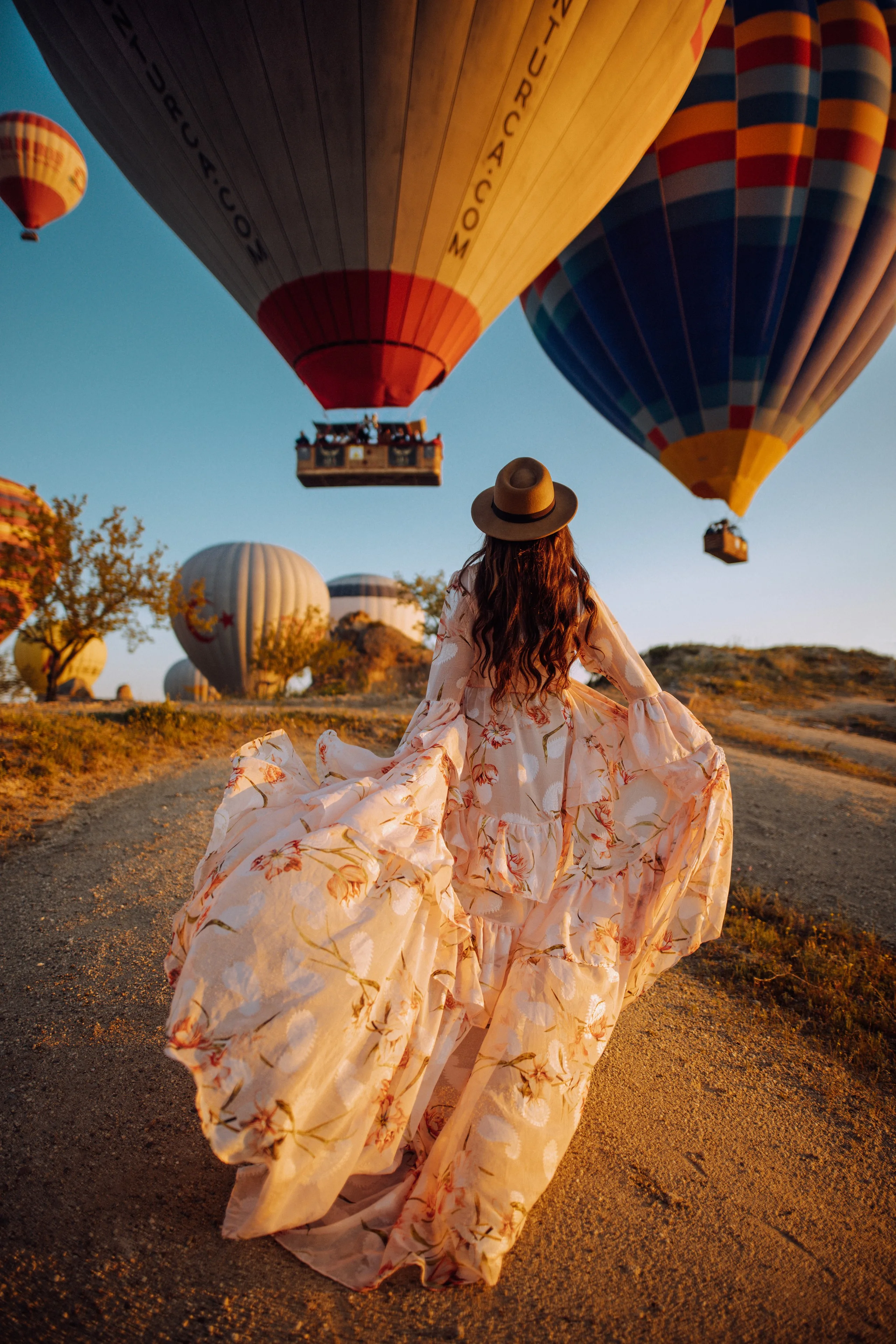
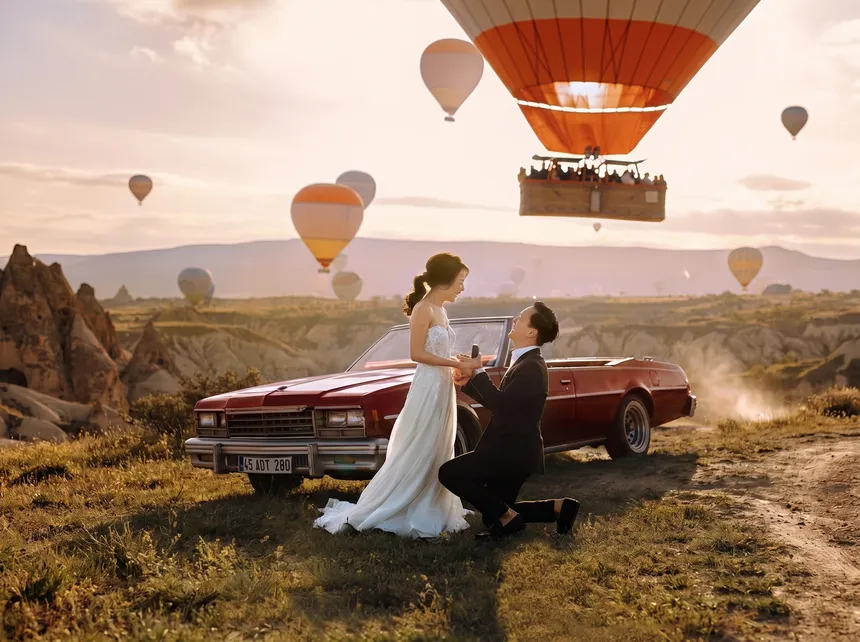
For the last few years this has been the frame couples and brides ask me about most: a dress that opens enormous in the wind, metres of train rippling in the air, and behind it hundreds of balloons. Its name is flying dress. In this piece I explain what it is, how it’s actually shot, and what a good flying dress frame really depends on — because, contrary to how it looks, the work isn’t in the dress. It’s in the light and the timing.
What a flying dress actually is
A flying dress shoot uses a specially made gown with a very long, very wide train. The train might be three metres, sometimes five; an assistant (often me or someone from the team) stands just outside the frame and tosses the fabric into the air at the right moment, and the wind opens it. The result is a cloud of cloth turning and rippling around the figure.
The dress usually comes as a rental, in different colours and cuts. So you don’t need to bring your own gown — a flying dress is its own experience, separate from a wedding shoot. It can be done for a woman alone, for a bride, or for a couple.
Why the work is in the light, not the dress
The same dress is ordinary in harsh midday light and magical in the golden fifteen minutes of sunrise. The entire effect of a flying dress is hidden in that low, warm light passing through the fabric. That’s why I almost always build these shoots around sunrise: the air is cool, the light is horizontal, and — most importantly — the balloons are in the sky at exactly that hour.
I wrote about how the light shifts through the day and why it’s worth waiting for in my journal on waiting for light. With a flying dress it matters even more, because the cloth is semi-transparent; light from behind turns it into a lantern.
Choosing a colour
The second most common question is colour. In short:
- Red / burgundy: the most dramatic contrast against Cappadocia’s earth tones; catches the eye even from a distance.
- White / cream: a bridal feel, soft and timeless; it glows in the morning light, but the background should stay quiet.
- Pastel (blush, lilac, sage): the most harmonious with a spring valley; editorial and light.
- Yellow / orange: the same palette as the sunrise; it melts into the colour of the balloons for a warm whole.
We choose it together based on your skin tone, your hair and the sky that morning. To couples torn between two colours I usually say let’s try both; a second dress makes a small difference but doubles the variety of frames.
Wind, balance and those few seconds
A flying dress isn’t technically hard, but its timing is delicate. When the dress is tossed it stays open for a second or two; in that window your posture, hair and face all have to be right too. So we repeat the toss many times — at a patient, unhurried rhythm. If the wind is too strong the fabric goes out of control; if there’s none it won’t open. Sunrise usually finds the sweet spot between the two on its own.
A few practical notes:
- Wear something comfortable underneath; you need freedom to move as the dress swings.
- Shoes are mostly invisible; barefoot is the easiest.
- Don’t pin your hair up; hair loose in the wind completes the frame.
- Keep the date flexible; leave a spare day for the balloons and the wind (what each season brings is in my season guide).
Who is it for?
A flying dress is the most dramatic version of a bridal session, a couple’s search for “something different,” or simply a morning you give yourself. You can see how solo bridal sessions unfold on the bridal sessions page, and couple shoots on the couple sessions page.
If you’re planning a flying dress morning in Cappadocia, let’s first talk through the date and the colour together; the rest we leave to the wind and that low light. The best frames aren’t the planned ones anyway — they’re the ones where you’re smiling from behind the fabric as it opens.