Reading light in a sunrise balloon shoot
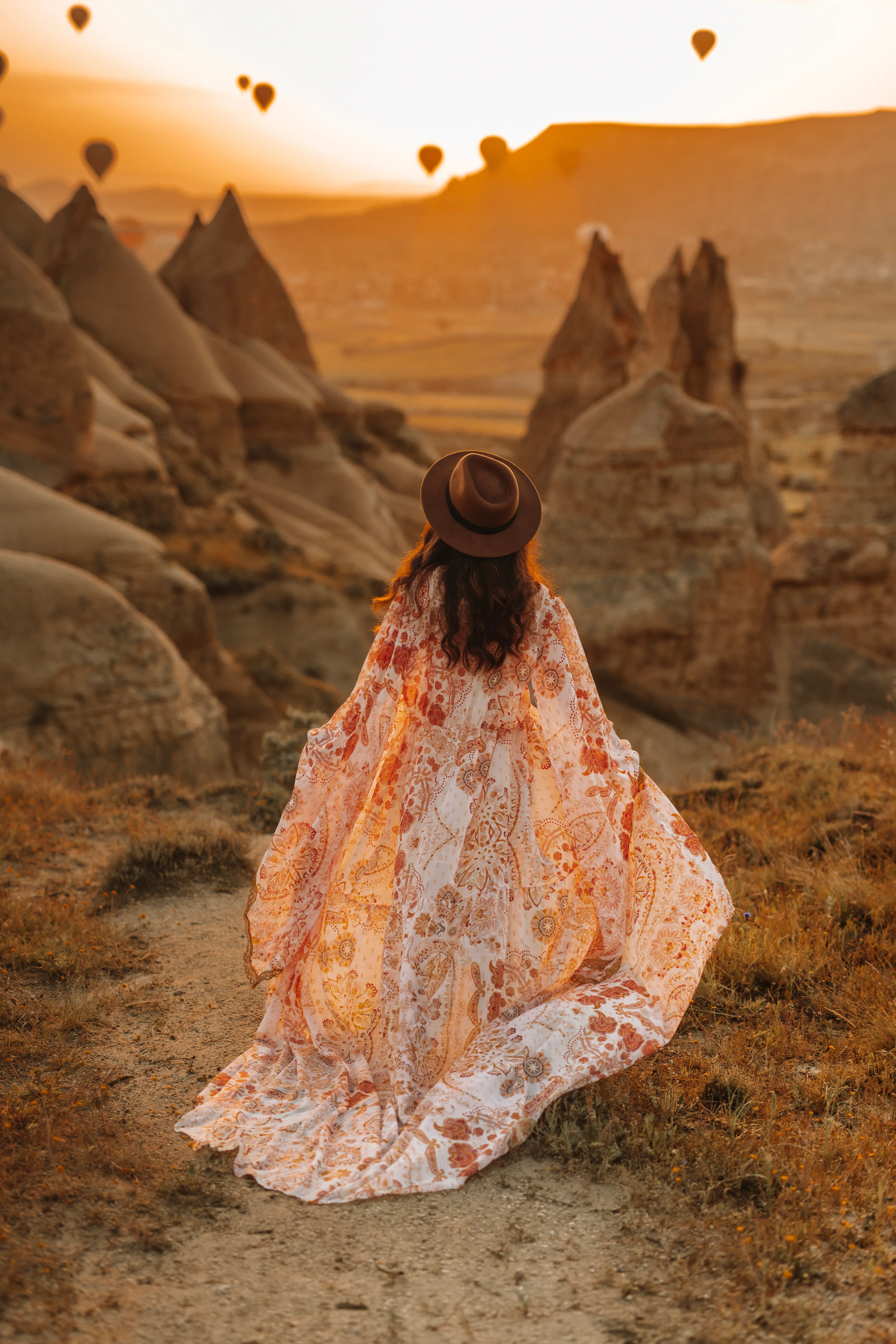
A sunrise balloon shoot is an impatient job. The light window is roughly 22 minutes. In that time the balloons lift off, the sun touches the valley rim, and you should already be on your fifth frame. Exposure, composition, and direction — all flowing at once.
The one thing I’ve memorised on the ridge is this: meter on the subject’s face, never on the sky.
Golden window
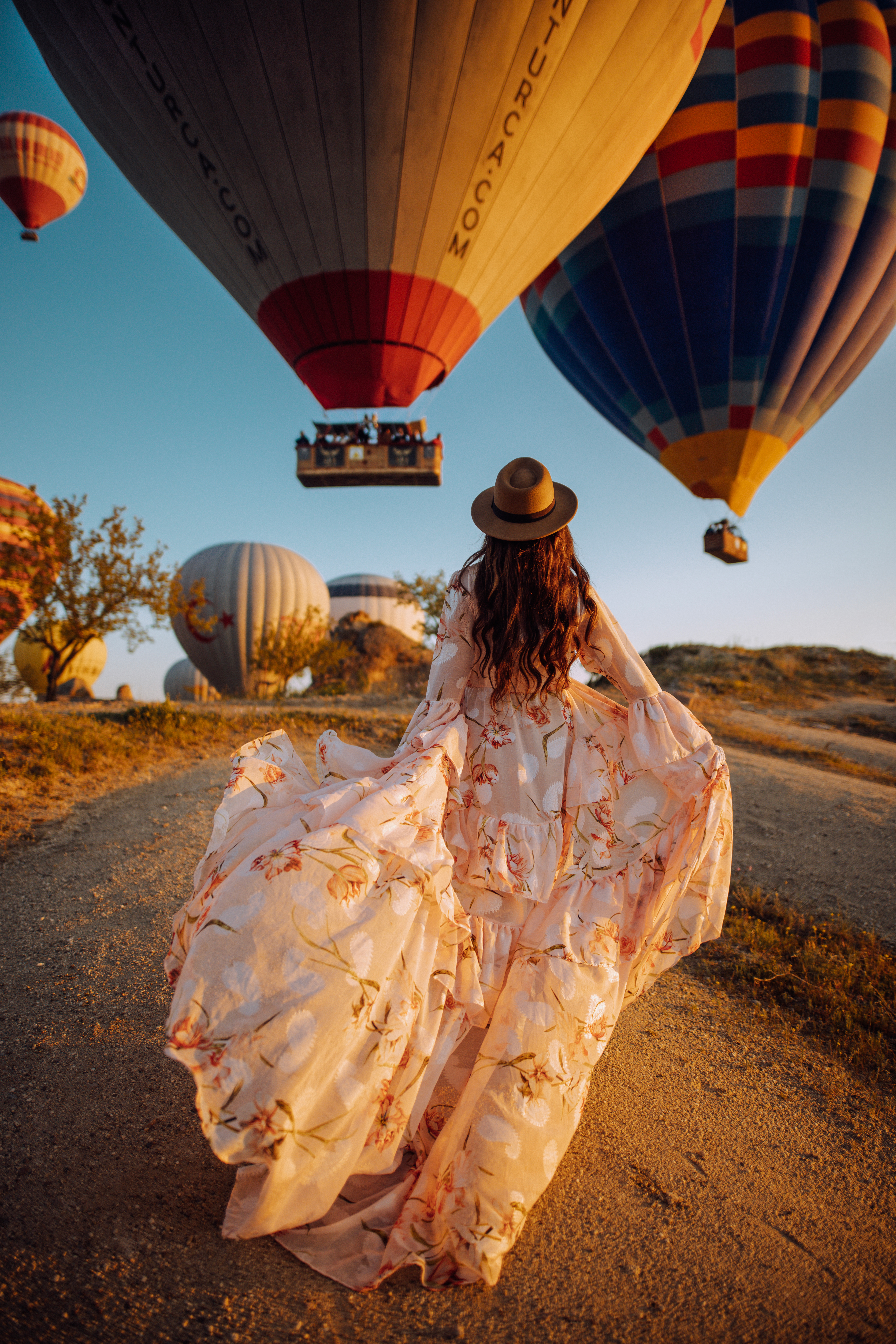
I call the first 12 minutes after sunrise the “golden window.” Because the light comes in sideways, it lights the inside of the balloons and turns them into paper lanterns. With the sun behind you, your subject gets a warm edge light spilling down from the shoulder — no reflector can fake that tone.
This is also where most frames die. Meter to the sky and your subject sits in shadow; meter to the face and the sky blows out. I park just left of centre: spot-meter on the cheekbone, then dial in exposure compensation around -2/3 to -1 stop.
Silhouette or warm spill
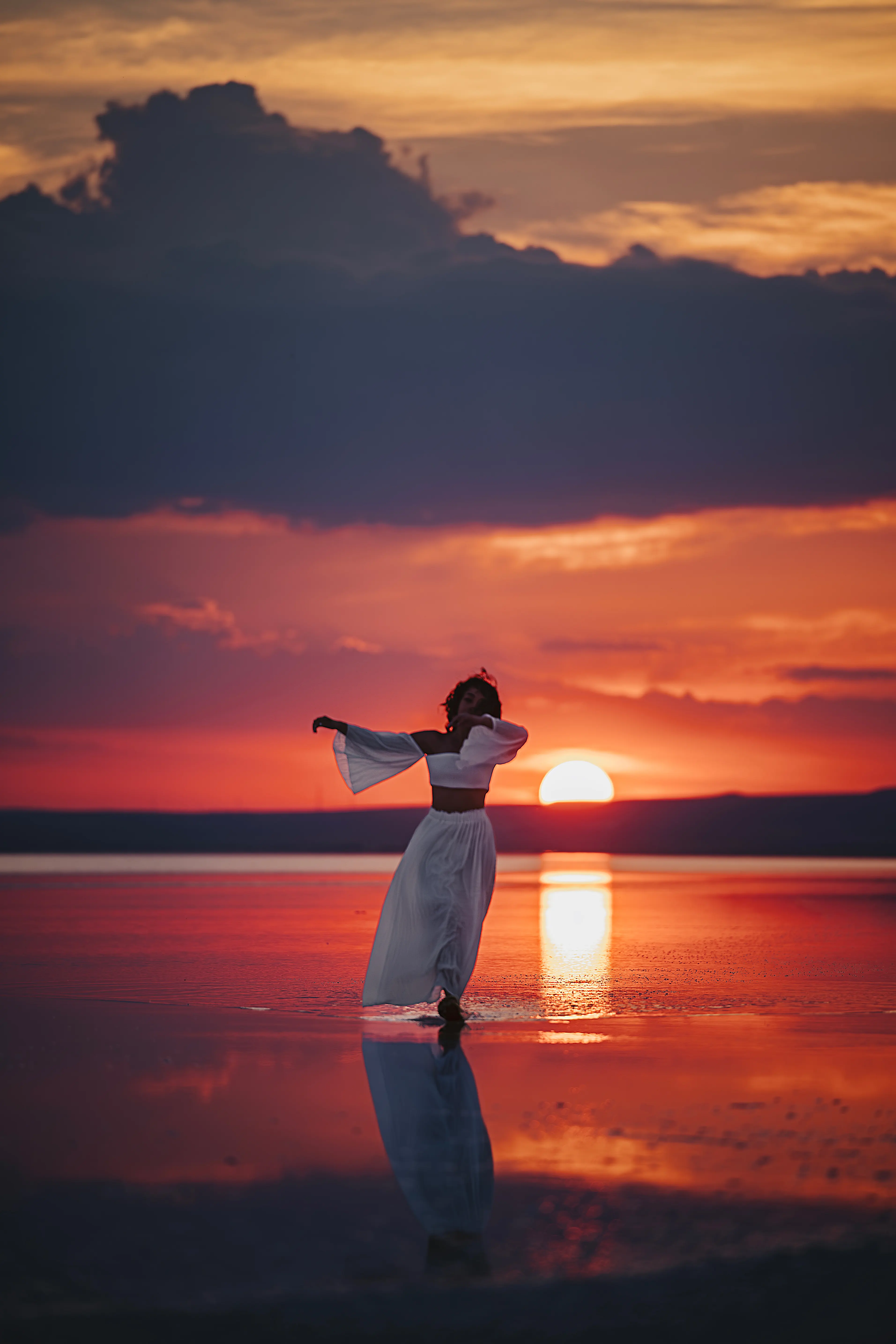
There are two languages here. Don’t mix them. If you want silhouette, put the subject in front of the balloon and meter the sky; let the body go completely black. If you want warm, over-the-shoulder light, place the sun 45 degrees behind the subject and expose for the face; the balloons will run slightly hot, but the frame is about the person.
Trying to do both in one scene reads amateur. Either document or paint.
Metering checklist
When my head gets crowded on set I run this list. First, spot-meter off the face. Then check the histogram — the right edge shouldn’t touch the sky, but it should fill about two thirds. Third, the moment balloons enter the frame, lock the exposure; as they move the light scatters, and chasing it kills the rhythm of the frame.
Aperture: f/4 to f/5.6. The balloons are already crisp as silhouettes — you don’t need to push the bokeh.
Wardrobe matters
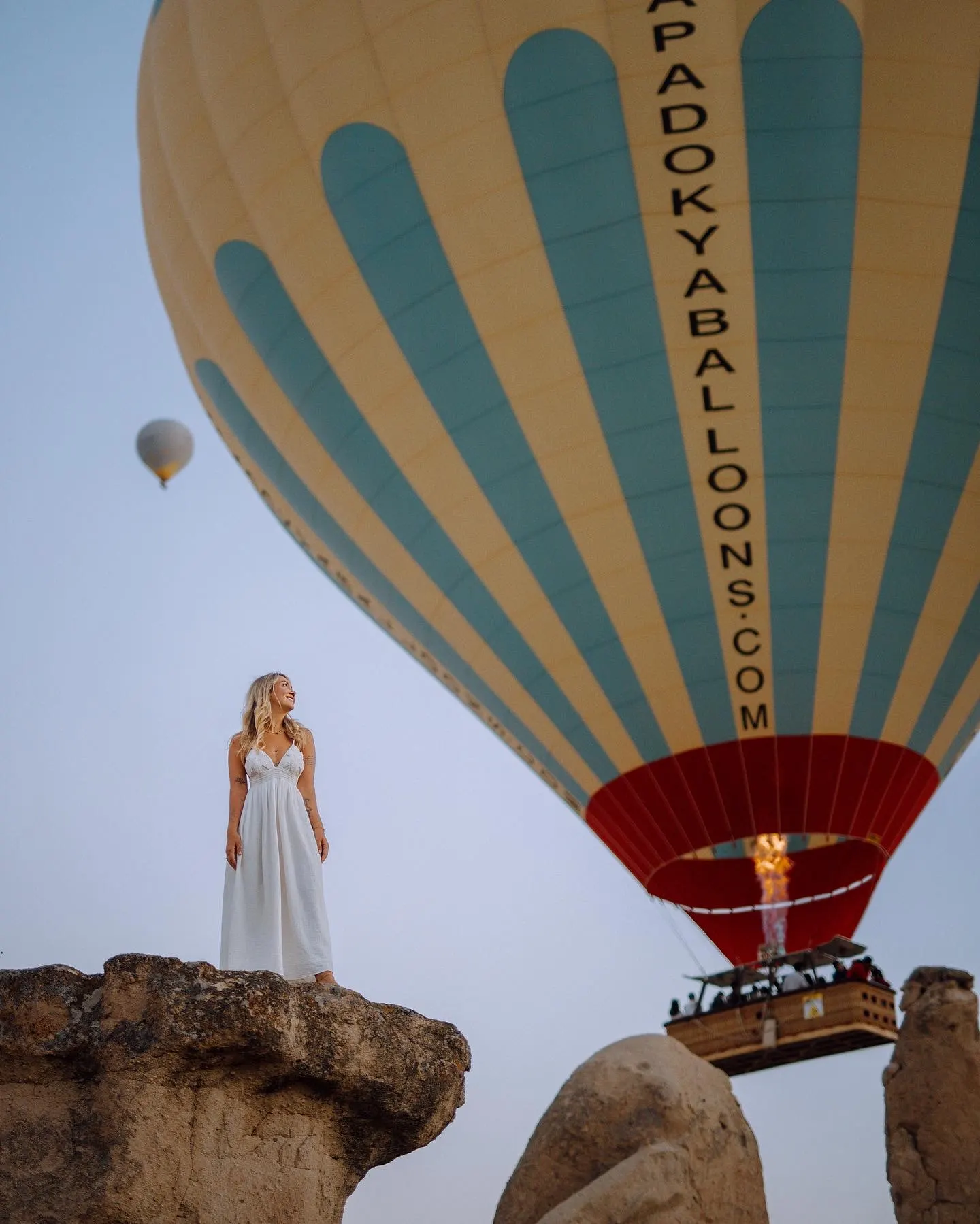
Long, light-toned, textured fabrics work best in the golden window. Pure white wedding gowns will blow out — cream, sand, dusty pink absorb the light and add volume to the body. Black is magic for silhouette and weak for edge light. Three days before the shoot I send the client one reference: “this texture, this length.”
A living rhythm
There is no “pose” in a balloon shoot, not for me. The wind, the pilot shouting next to the basket, the hair lifting off the neck — it’s all part of the frame. I usually count three before the shutter: the subject exhales, the body relaxes, and the frame lands there. The rest we talk about in the gallery.